Back to Blog
Follow us



At Tom Howley, we have witnessed a distinct shift in how our clients want their kitchens to feel. The appetite for ornate detailing and traditional formality has softened. In its place? A desire for calm, clarity and considered simplicity.
The rise of the contemporary kitchen isn’t about minimalism for its own sake. It’s about creating a space that feels ordered, restorative and timeless, without ever feeling cold. And nowhere is this more evident than in our new Malone collection.
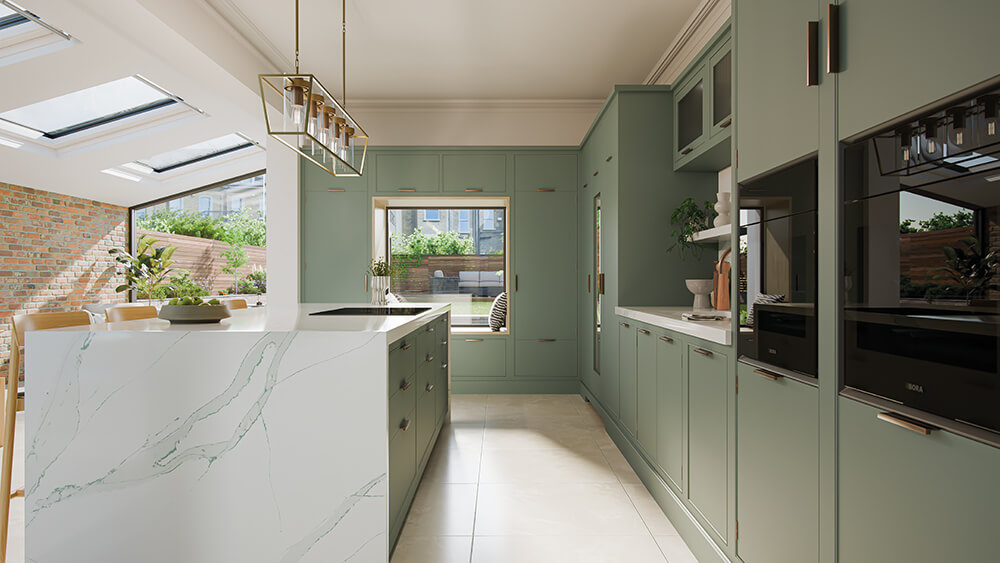
Homes today are expected to do more than ever. They must support productivity, social connection and, increasingly, our mental and physical wellbeing.
We are seeing a rise in:
The modern kitchen must accommodate these evolving priorities. It needs to feel serene, yet hardworking. Architectural, yet warm. Structured, yet adaptable.
This shift is closely linked to what many designers describe as the “nervous system era” — interiors that actively support mood regulation and emotional balance. Acoustic comfort, layered lighting, soft contrasts and natural textures all play a part in creating sanctuary-like spaces.
Contemporary design, when done well, reduces visual noise. Clean lines and integrated appliances eliminate clutter. Thoughtful storage ensures everything has its place. The result is a kitchen that restores rather than overwhelms.
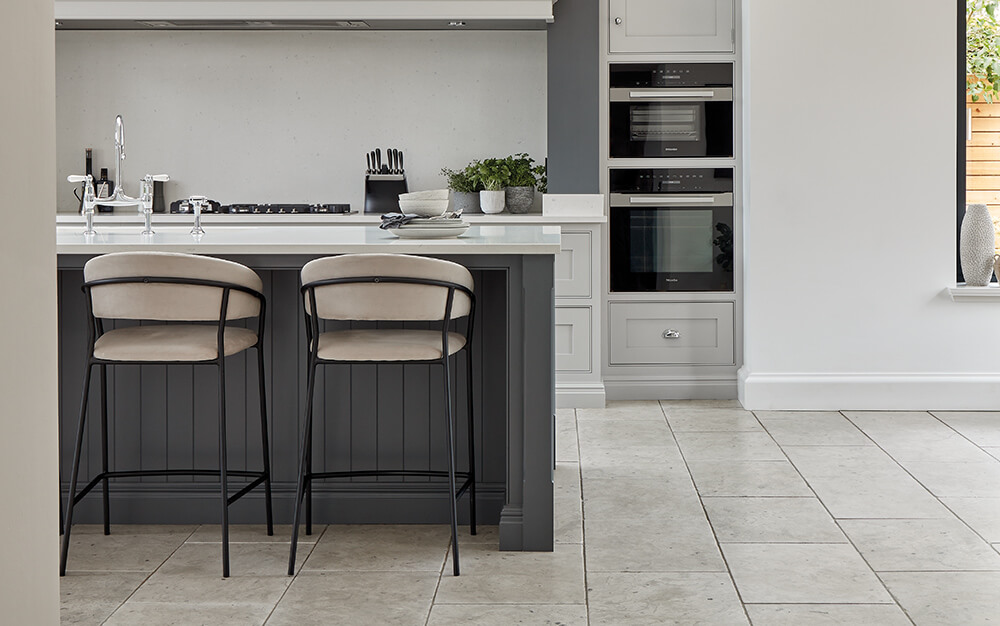
Designers across the industry are seeing the same shift.
Interior designer Juliette Byrne notes that clients are now “increasingly drawn to cleaner, calmer designs. They want kitchens that feel sophisticated and seamlessly connected to their living spaces, with thoughtful details rather than decorative excess.”
The kitchen is no longer a separate, purely functional room. It forms part of an open-plan ecosystem that must sit comfortably alongside dining and living areas. Cohesion and restraint are paramount.
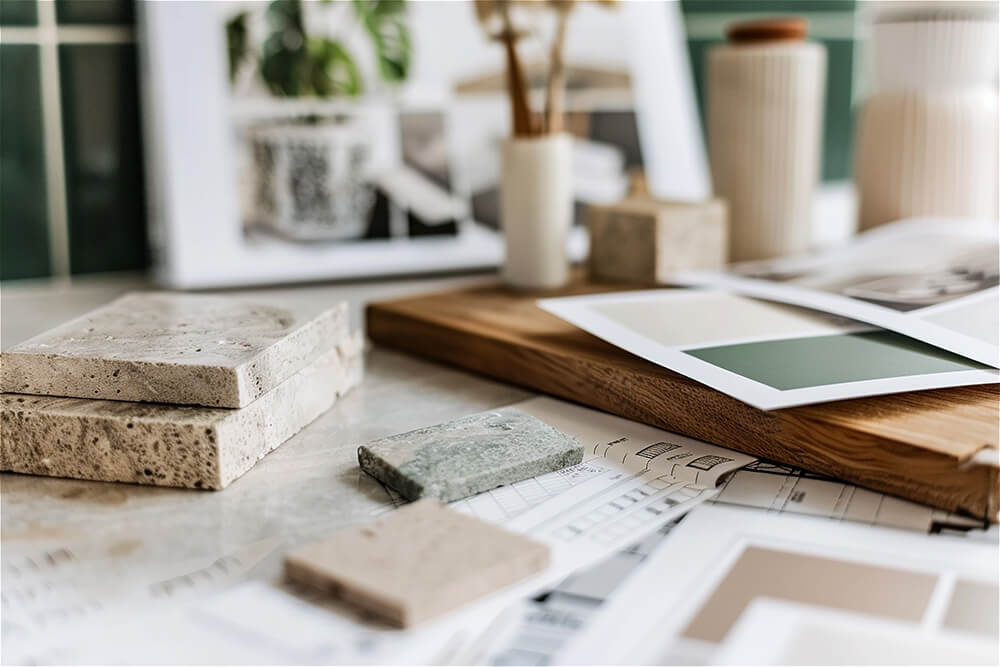
Interior Designer Clare Williams agrees, observing that “the growing preference for sleeker, more streamlined cabinetry is very much driven by modern lifestyles. With increasingly busy schedules, clients are prioritising designs that are easy to maintain and effortless to live with. Clean lines minimise visual clutter, making the kitchen feel calmer and more organised while still delivering a smart, high-end look.”
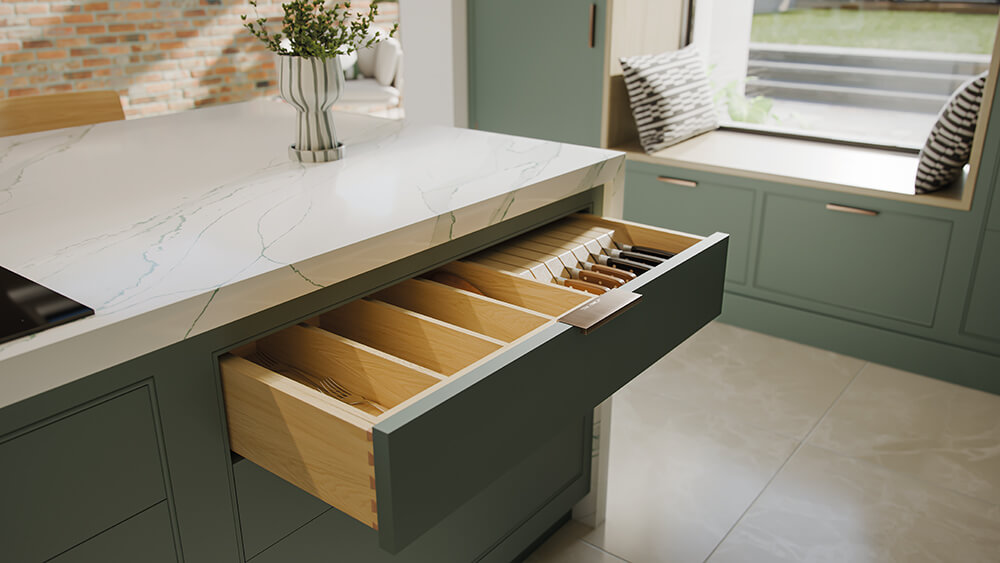
Functionality, too, has become non-negotiable. As Amy Dalrymple succinctly puts it, kitchens today must be “easy to look after and functional when life is getting busier.”
The contemporary kitchen is therefore not just an aesthetic choice; it is a practical response to modern living.
A true contemporary kitchen is not trend-driven. It is grounded in proportion, material integrity and clarity of form.
Architectural flat-front cabinetry creates a streamlined foundation. A unified, restrained material palette ensures cohesion. Integrated appliances maintain uninterrupted sightlines. Chunkier worktops and symmetrical proportions introduce weight and balance. Bespoke storage solutions work discreetly behind the scenes.
Cohesion is essential. Juliette Byrne explains that she begins with “a clear, unified material palette and makes sure every detail from surfaces to small appliances works within it. Integrated appliances also help maintain a clean, uninterrupted look.”
Clare Williams takes a similarly holistic approach, considering the wider home from the outset. “I always look at the kitchen in the context of the adjoining rooms and how the client ultimately wants the space to feel and function. That bigger picture guides every choice. The finishes on appliances, the flooring, the paint colours and all the smaller details need to work together so the space feels harmonious. Creating a cohesive contemporary aesthetic is really about making sure each element connects seamlessly with the next.”
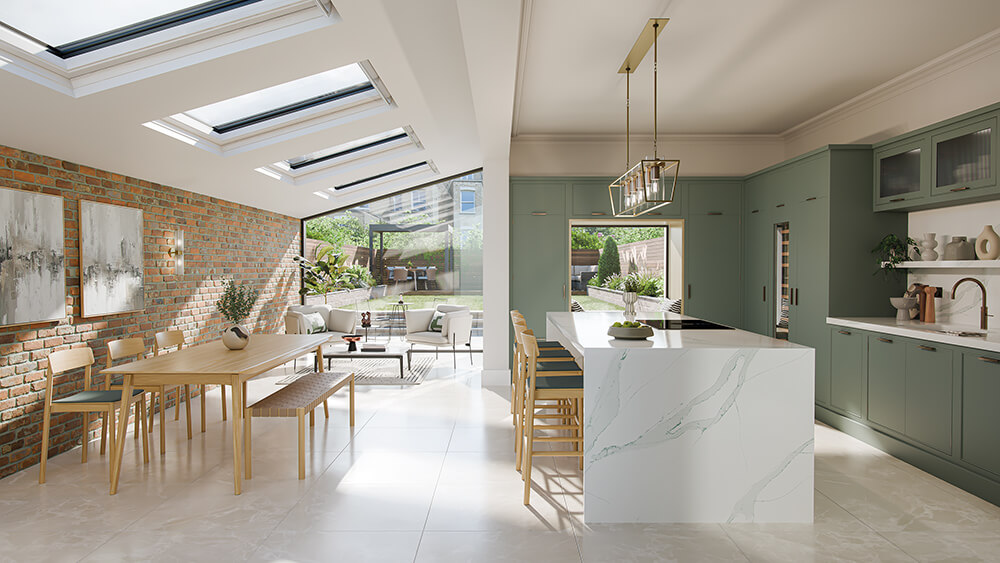
Perhaps the greatest misconception surrounding contemporary kitchens is that simplicity equates to sterility. In reality, warmth is introduced through thoughtful layering.
Juliette Byrne achieves this “by layering natural textures, beautiful materials and warm lighting. Even with a contemporary layout, elements like timber, stone and soft metals add character and softness.”
Clare Williams echoes this sentiment, reminding us that “modern does not have to feel cold at all. Colour plays a huge role, and the details matter as well. Cabinet handles, worktops, and upstands can completely transform a minimal kitchen into something original, warm and full of personality. Interestingly, even with the trend toward minimalism, clients’ requirements are becoming more complex. They want spaces that feel streamlined yet still express their individuality, so achieving a balance between contemporary design and character is more important than ever.”
And underpinning all of this is craftsmanship. In a pared-back scheme, there is nowhere for imperfections to hide. Juliette is clear that “it’s vital. In contemporary design, there’s nowhere to hide; every joint and finish is on show. High-quality craftsmanship ensures the simplicity looks refined rather than stark.”
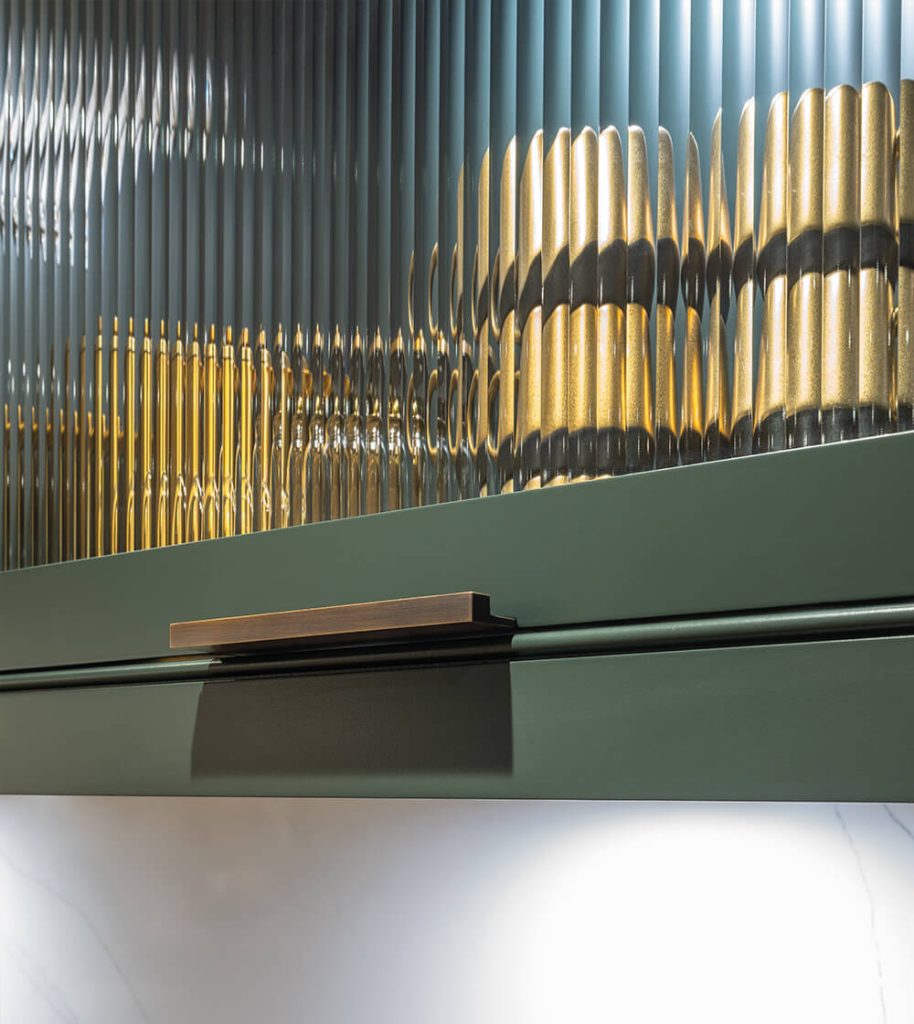
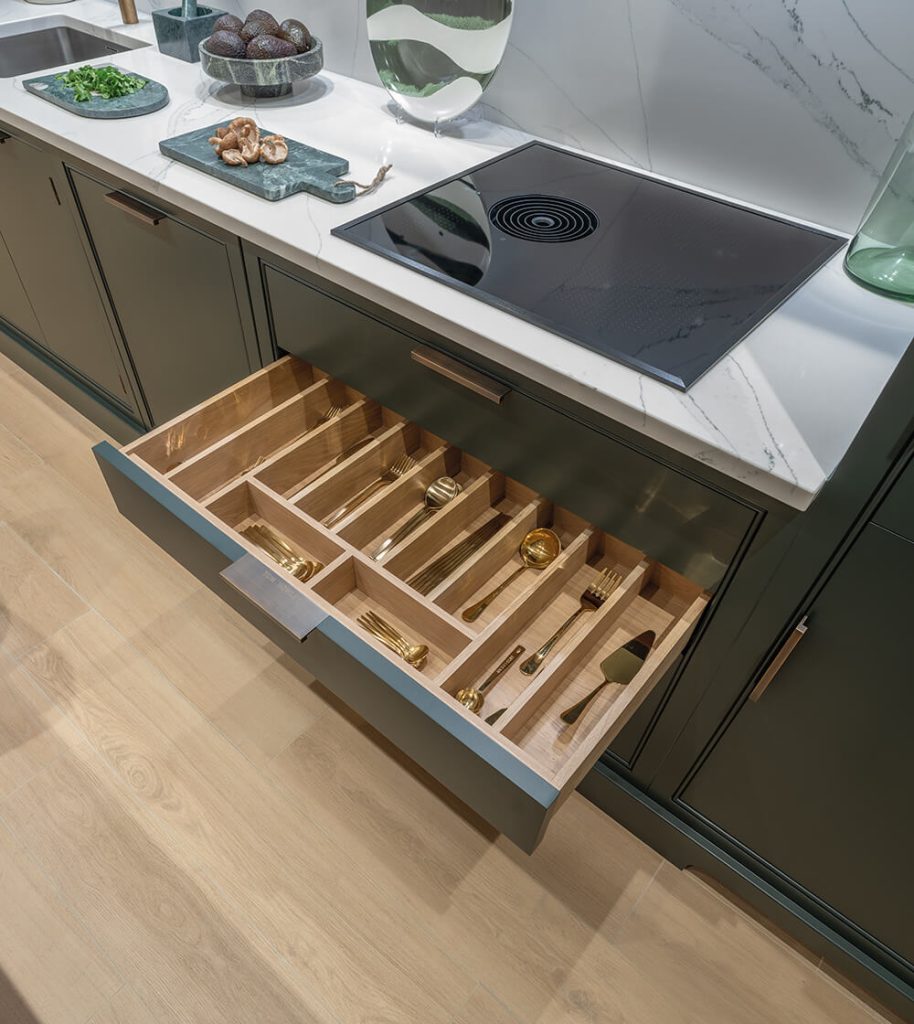
Clare agrees: “With the growing demand for contemporary and elegant kitchens, craftsmanship and quality are essential. Every detail needs to be precise because even small imperfections can disrupt the clean, streamlined look. Exceptional workmanship ensures that the kitchen not only looks smart but also performs flawlessly for years to come.”
“Over the last 25 years, we’ve introduced 6 styles of furniture, all of which continue to sell well,” says Creative Design Director Tom Howley. “But from time to time, we’d have clients saying that while they loved our handcrafted, bespoke quality, they wanted a simpler, more modern style which was easier to clean.” With those requests increasing, we introduced Malone.
Malone answers that call with architectural flat doors defined by an ultra-fine cock-bead detail, a subtle softness that tempers the geometry. Layouts are deliberately simplified. Worktops are typically chunkier at 50mm, symmetrical drawer stacks reinforce balance, and high-line cupboards emphasise verticality. Signature features include linear canopies, glazed dressers, floating shelves and optional reeded or plain glass panels for personalisation — contemporary elements grounded in handcrafted expertise.
Juliette Byrne describes Malone perfectly in three words: “Refined, architectural, enduring.”
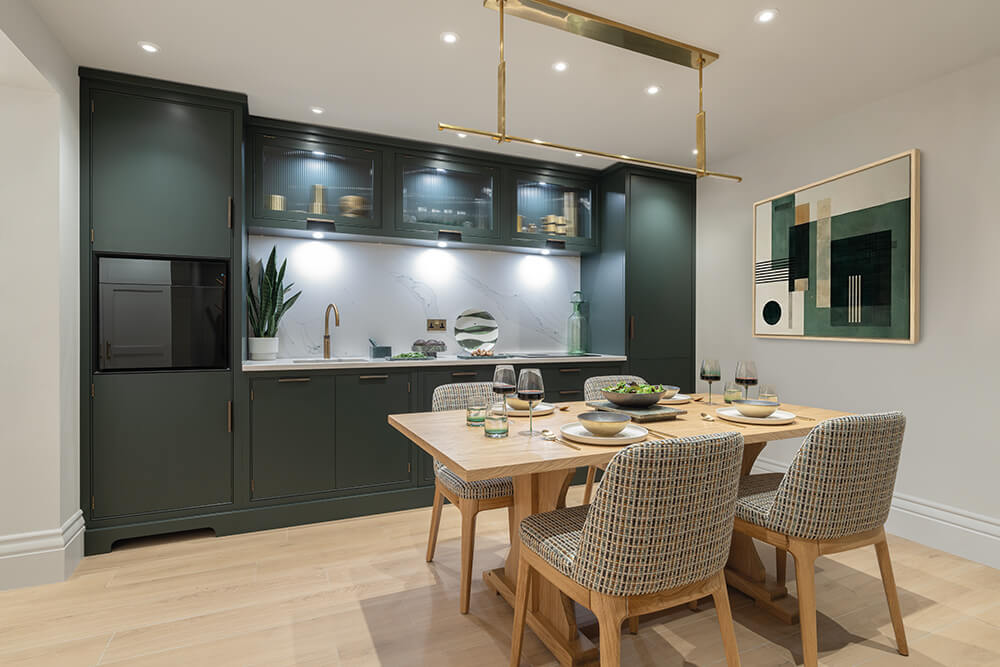
If you’re planning a calm and contemporary kitchen, here are the principles defining the most successful designs:
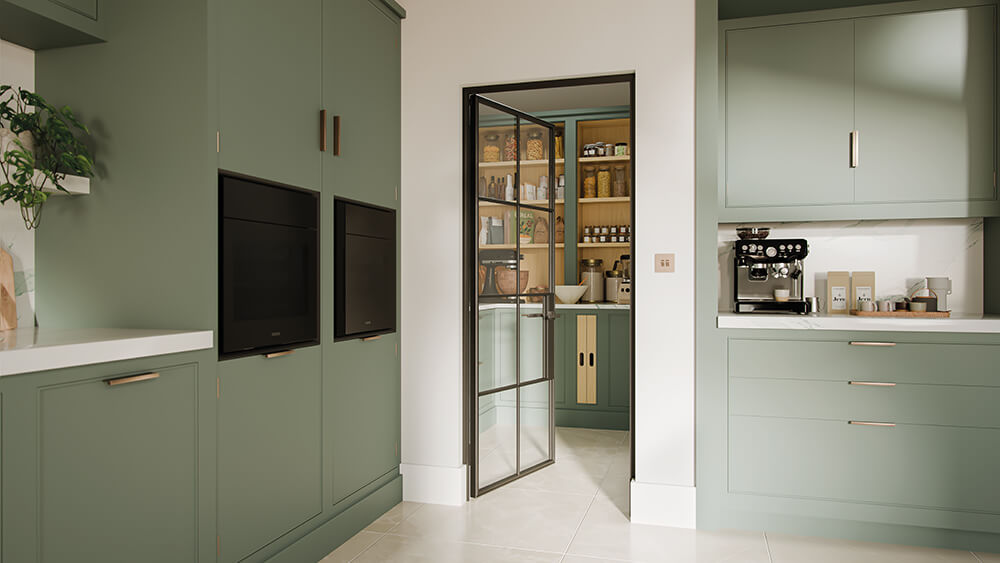
If you’re seeking a kitchen that reflects the way we live now, is supportive of wellbeing, is beautifully crafted, and is quietly architectural, the Malone Collection offers a new direction in contemporary design.
Visit your nearest Tom Howley showroom or book a complimentary design consultation to explore how a contemporary kitchen design could transform your home into a space of calm, clarity and enduring style.
Thanks to interior designers Juliette Byrne, Amy Dalrymple, and Clare Williams for their insights.