Blog
Have You Got FOBO (Fear of Being Outdated)?
We all fantasise about what our “dream home” might look like in a perfect world. Many of us have a vision, a Pinterest board, or a big idea, but surprisingly few of us actually ever bring it to life.
If you’ve ever found yourself holding back on colour, defaulting to a layout that feels more “normal”, or investing in features you don’t think you need, but know are expected, you might have been the victim of FOBO – the fear of being outdated.
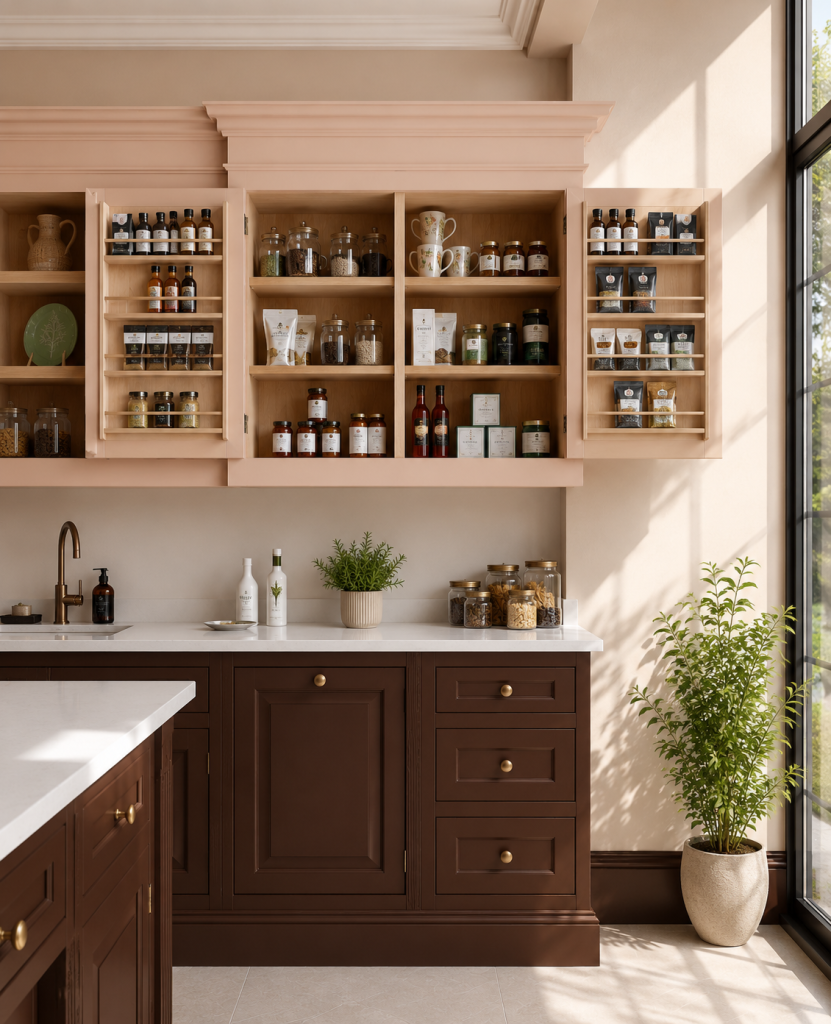
When it comes to actually making those practical design decisions, we find that most homeowners end up designing not around what they love, but what they think they won’t regret.
So, how do we tackle FOBO? How do we design beyond trends? How do we grasp that dream kitchen, without compromise? Keep reading to find out how Tom Howley designers help our clients navigate FOBO and create a home that never feels outdated.
The Rise of the Safe Kitchen
What is often described as “timeless” is, in reality, just low risk.
This has resulted in millions of safe kitchens designed to feel like a “blank canvas”. Cool neutrals, expected layouts, design that feels palatable for any future buyer. These kitchen decisions aren’t driven by love, they’re driven by fear. It’s why they feel safe, but also why they feel so “samey”.
At Tom Howley, we know that timelessness doesn’t come from colours, finishes, or materials. It comes from what brings you – individually, personally – joy at home.
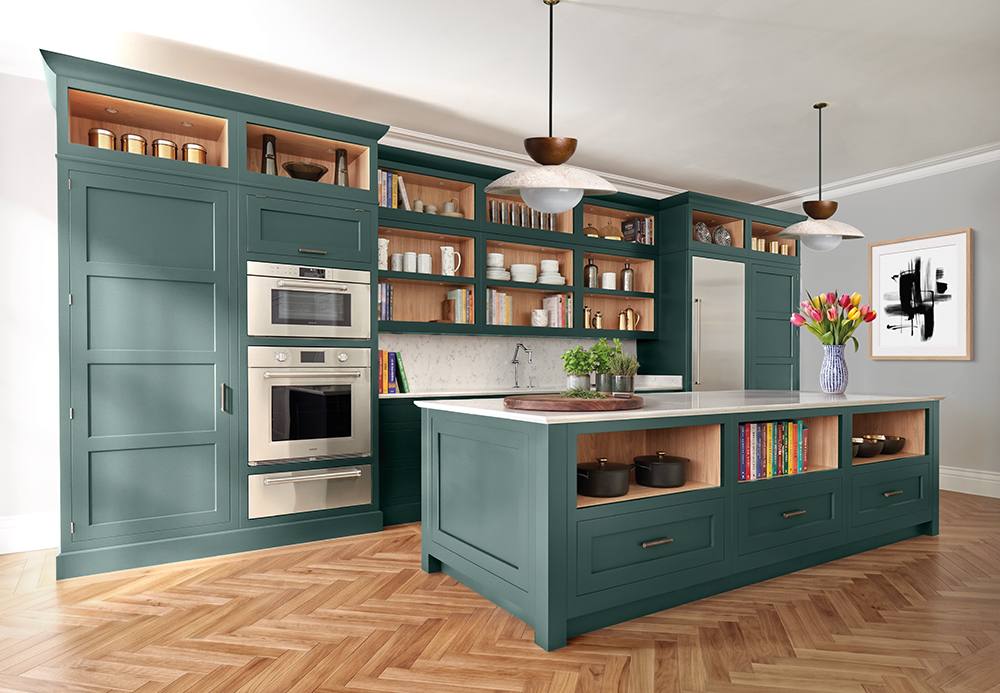
What Really Makes a Room “Dated”?
For many years, interiors trends moved in cycles of around 30 years, with the same design elements and “retro” feelings appearing in a slow, recognisable pattern. Recently though, this has changed.
Social media has sped up the trend cycle to the point where some trending features are out almost as soon as they are in, making avoiding FOBO feel more difficult than ever, so it’s understandable that homeowners feel the need to keep up.
In today’s interiors landscape, “dated” isn’t necessarily about the age of your kitchen.
We recognise trends when they are overfamiliar. It’s repetition, not time, that creates the sense of something feeling tired.
Spaces tend to feel dated when they:
- Lean too heavily into one single design idea
- Lack visual balance and principles of solid design
- Are laid out based on surface trends rather than how the space really works day in, day out.
- Neglect quality materials in favour of quick, trending finishes.
This is how a space can feel just as dated when it’s 3 years old as it can when it’s 30.
Understanding FOBO in Practice
The irony here is that when you create a space that you really truly love, unencumbered by FOBO, you’ll probably find it lasts much longer before you want to redecorate or renovate.
Designing with FOBO in mind is more expensive and labour intensive as a result, but the main problem that comes from designing to avoid being outdated is that you stop designing for yourself.
When a design is led by FOBO, there’s often a lack of contrast or character, and the space becomes interchangeable – one that could exist in any home. This can cause a real sense of disconnect as future buyers are prioritised over the people who live there now, and a loss of attachment to what otherwise might be your dream home.
Ultimately, if decisions are made only with resale in mind, the space is never fully yours. And what makes your home special, if it doesn’t feel like you?
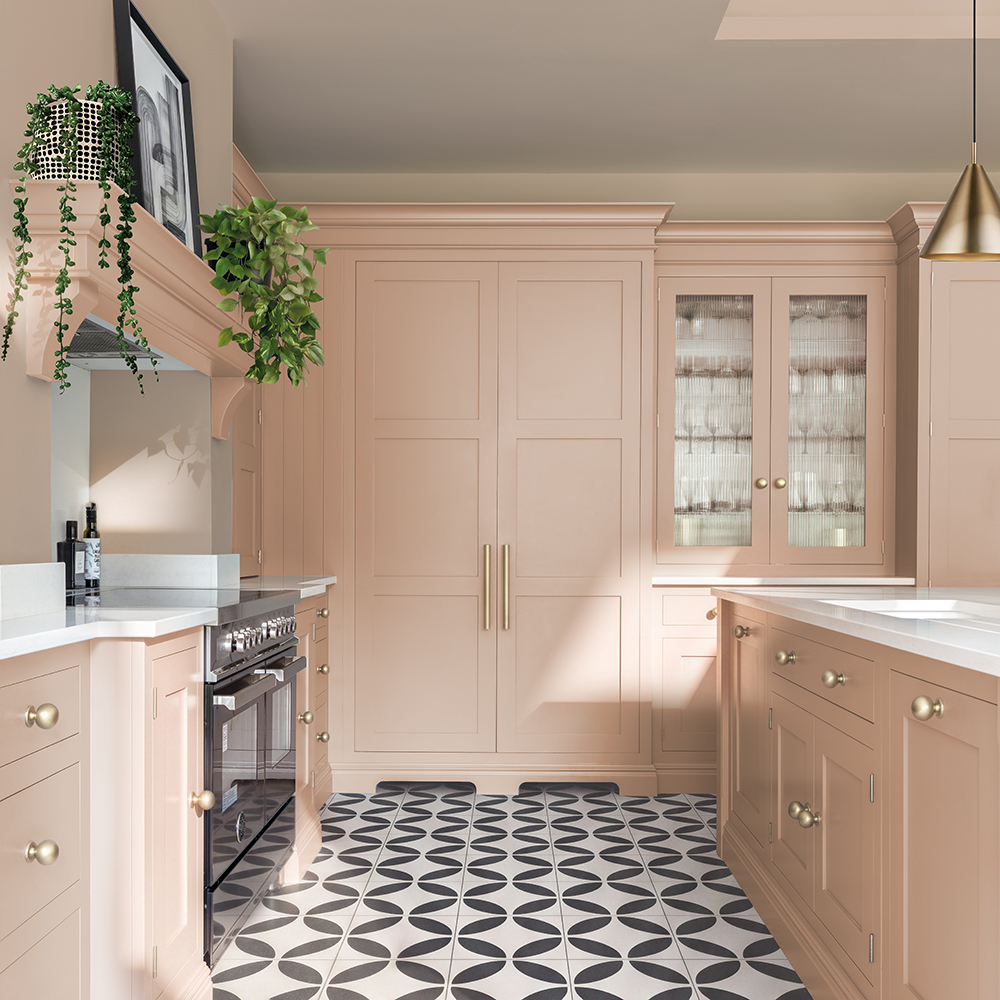
Cottage or Chaotic?
For most of history, open shelving was the default. Kitchens were working spaces, not social ones, so were practical by necessity, with cabinets simply not needed. In the 1980s, as kitchens became somewhere to entertain as well as cook, fitted cabinetry arrived and closed the cabinet door on clutter.
In the 2010s, cottagecore was in, and open shelving was back. It looks undeniably beautiful in photographs, but requires constant cleaning and careful curation, something that for most households, with our everyday mix of cereal boxes, mismatched mugs, and cooking oils, just isn’t realistic. It fell out of favour quickly once that became clear.
The kitchens that have aged best from that era are the ones that used open shelving and cabinetry together, with curated shelving around windows, intentional breaks in cabinetry, or minimal open sections paired with reeded glass cabinets. These are the kitchens that feel practical and don’t demand perfection, while maintaining the rustic, eclectic feeling that so many homeowners love.
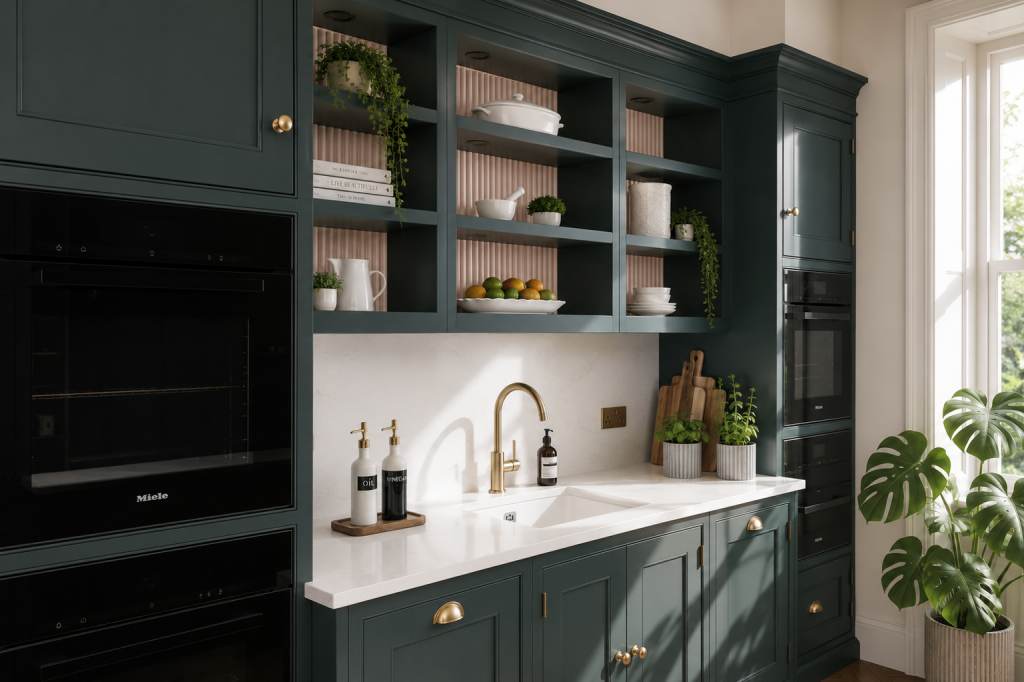
Feature or Fatal Flaw?
One of the features we’re seeing currently grow in popularity is the “appliance garage” – a run of cabinetry designed specifically to hold and hide appliances like the blender, toaster, kettle, and coffee machine. For many households, it’s a genuinely brilliant solution: clutter disappears, the kitchen feels calmer, and people who have them tend to love them.
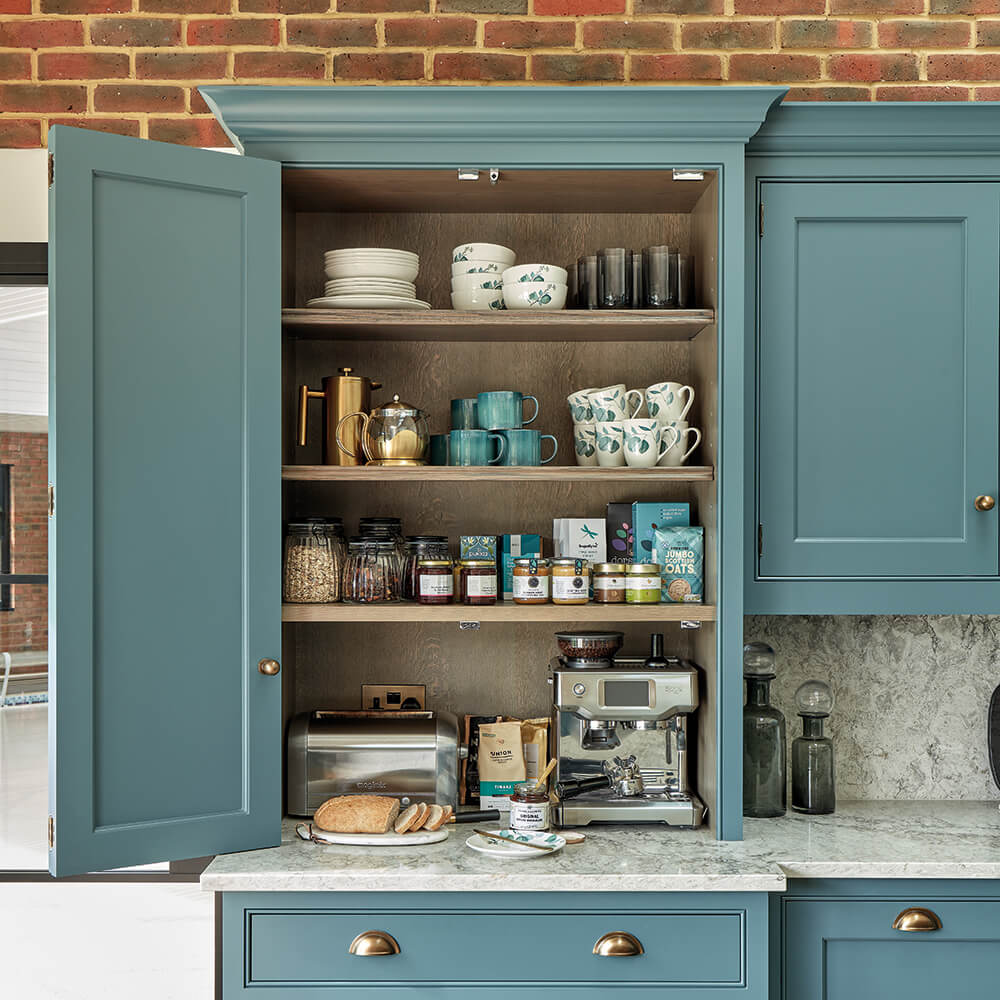
However, it does take up counter space that then can’t be used easily for anything else. In smaller kitchens, or cook’s kitchens where workspace is at a premium, the chances are it’ll become an inconvenience rather than an asset, to eventually be ripped out when a remodel comes around. For those households, it’ll just get in the way.
Beyond the Fear of Being Outdated
A kitchen rarely feels outdated because it was personal. It feels outdated because it was designed to please everyone.
Breaking away from FOBO isn’t about rejecting trends entirely, but loosening their hold.
The spaces that endure are the ones designed with confidence, not caution. When choices are softened to feel broadly acceptable, the result is often something that never quite fits anywhere beyond a fleeting, trend-led moment. A kitchen grounded in how you live, your preferences, your sense of balance and contrast, will always feel more relevant than one designed to follow a pattern.
Most importantly, individuality in home design means that you, the person who actually lives there, actually loves to live there. And that never goes out of style.
If you’re thinking about how to inject personality and timelessness into your own space, why not visit a Tom Howley showroom? Our designers are on hand to listen and collaborate, translating your ideas into a kitchen that feels truly individual and perfectly timeless.