Back to Blog
Follow us



The success of a modern country kitchen today is less about scale or spectacle, and more about the quality of its planning. This Summerville project demonstrates how a compact footprint can be transformed through careful zoning, considered storage and a layout designed to support modern daily life without visual clutter. By making intelligent use of every available nook, the design allows the space to move naturally between cooking, dining and socialising.
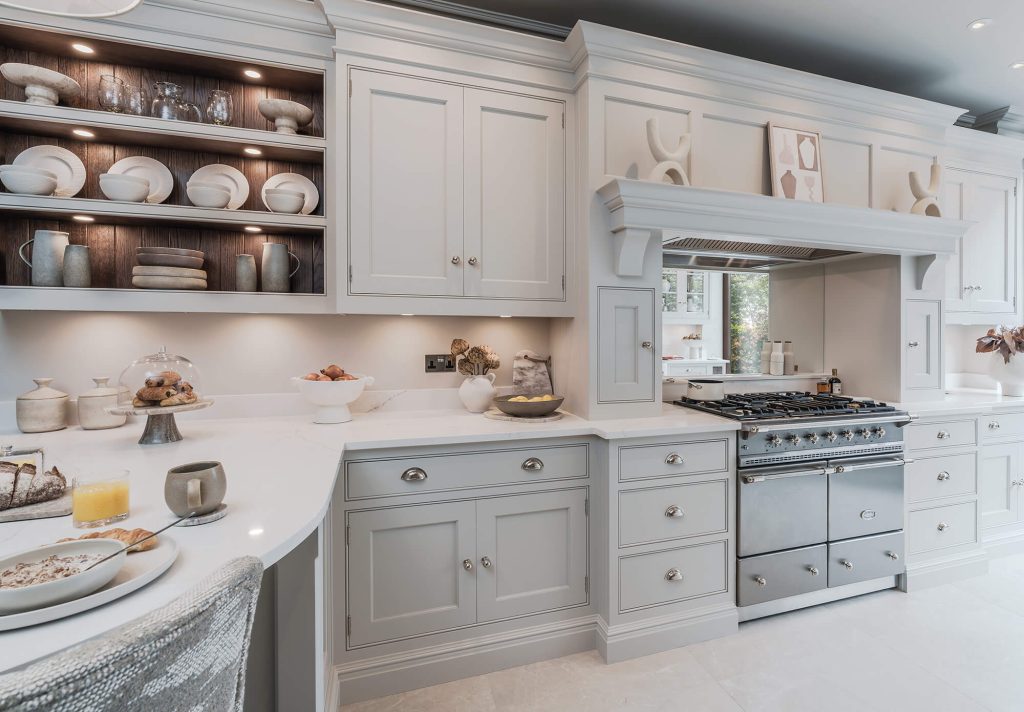
At its core, this is a transitional kitchen, sitting confidently between traditional and modern. Cornices, shaker doors and a statement mantel bring a sense of heritage, while clean lines, sleek appliances and crisp quartz surfaces keep the space feeling current and light.
The Summerville collection’s versatile approach allows it to be tailored to any home, whether period or modern, with finishes, timber tones, and bespoke storage solutions adapted to suit individual taste and everyday living.
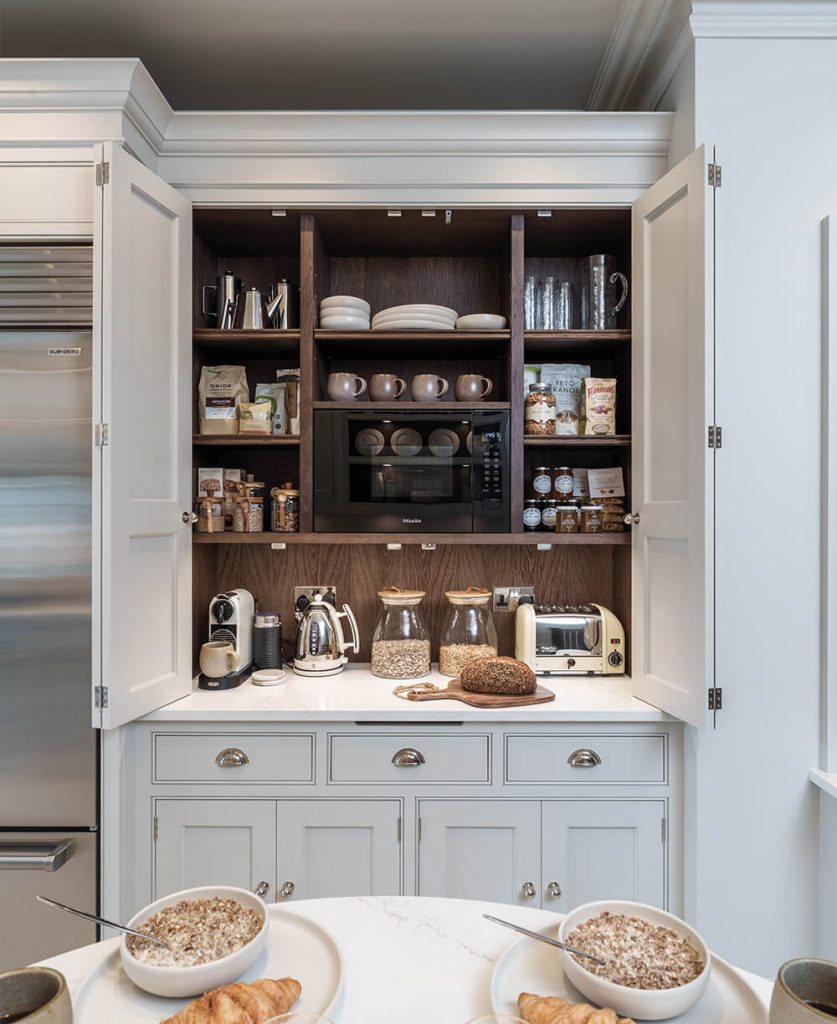
This particular kitchen speaks to a particular homeowner: people who value quality, routine and calm. The breakfast station is a perfect example. Set up for efficiency, with a Nespresso machine and dual toaster neatly housed, it still embraces a slow-living aesthetic. Croissants laid out, juice poured, the morning ritual becomes intentional rather than rushed.
This focus on ritualised living reflects a wider interior trend for 2026, where homes are consciously designed to support wellbeing and presence. Morning coffee routines, evening cooking rituals and moments of pause are no longer incidental; they are planned for. Here, the kitchen becomes the framework that allows those moments to happen effortlessly.
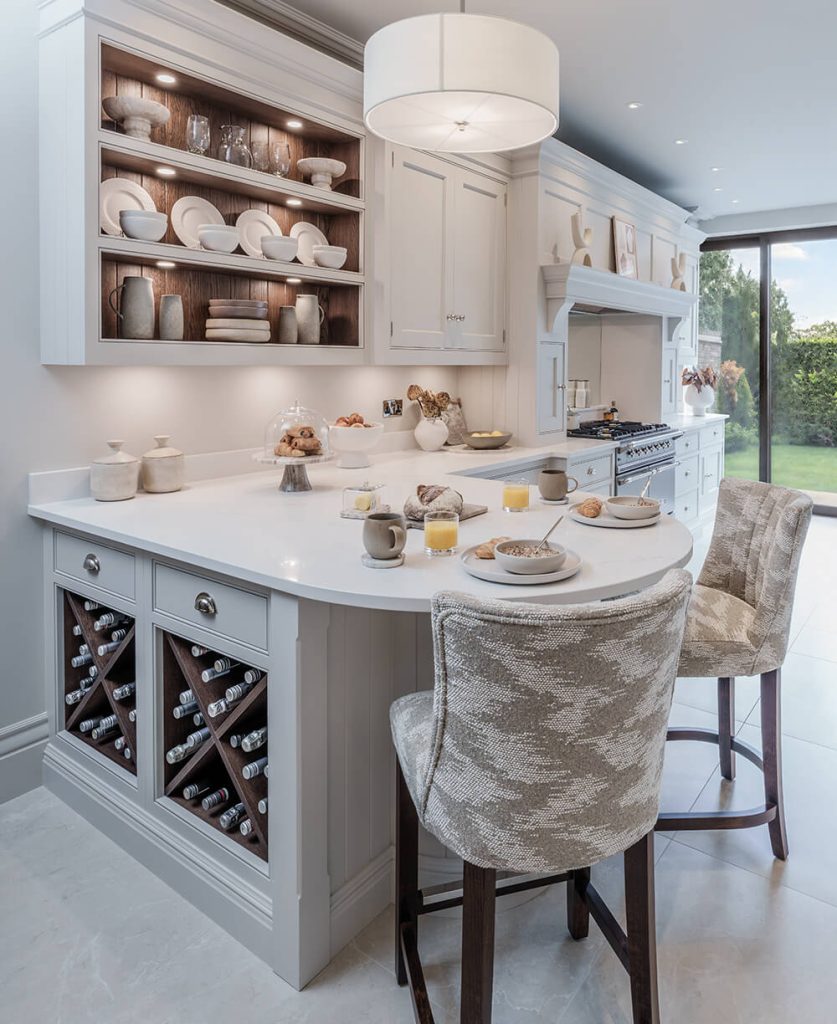
The island peninsula is the anchor of the space, cleverly zoned to balance function and sociability. Its curved form softens the layout while creating a natural gathering point. Rounded seating encourages guests to perch comfortably with a drink, allowing conversation to flow while the host cooks.
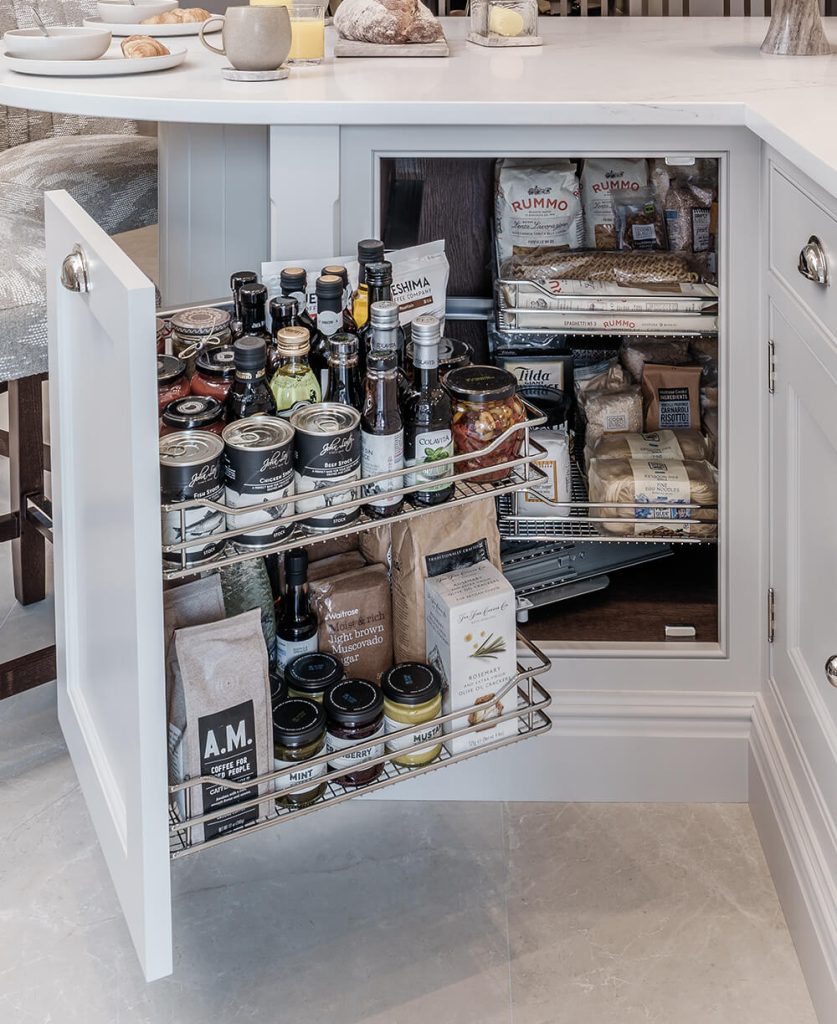
Storage is seamlessly integrated: a pull-out magic rack on one side, Tudor oak wine bins and deep drawers on the other. Nothing feels bolted on or excessive.
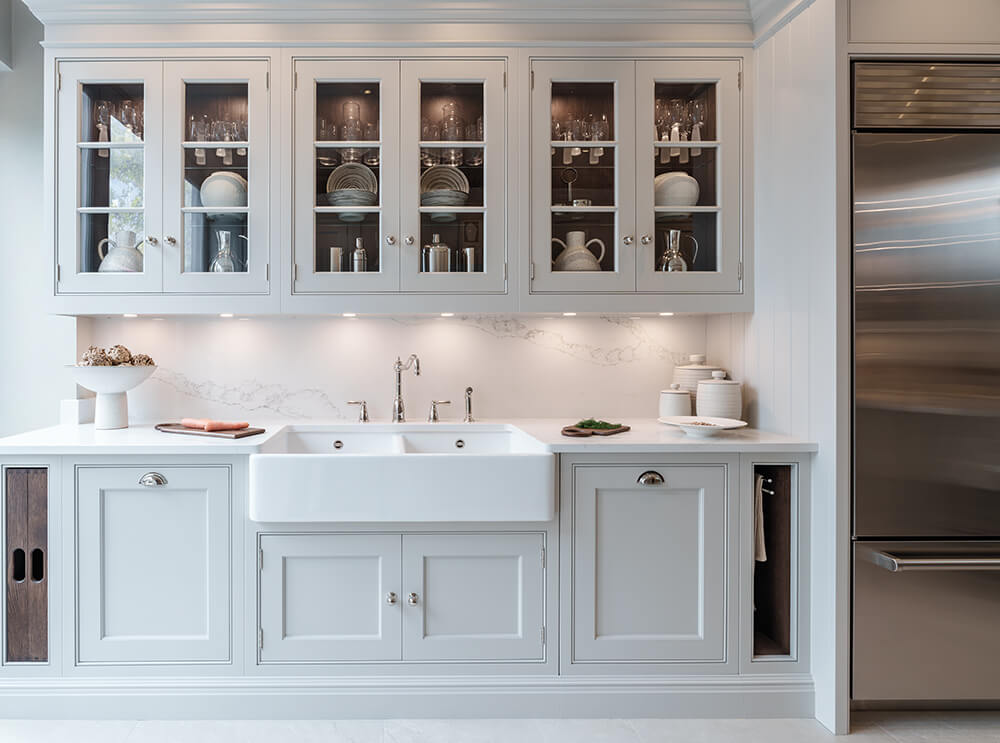
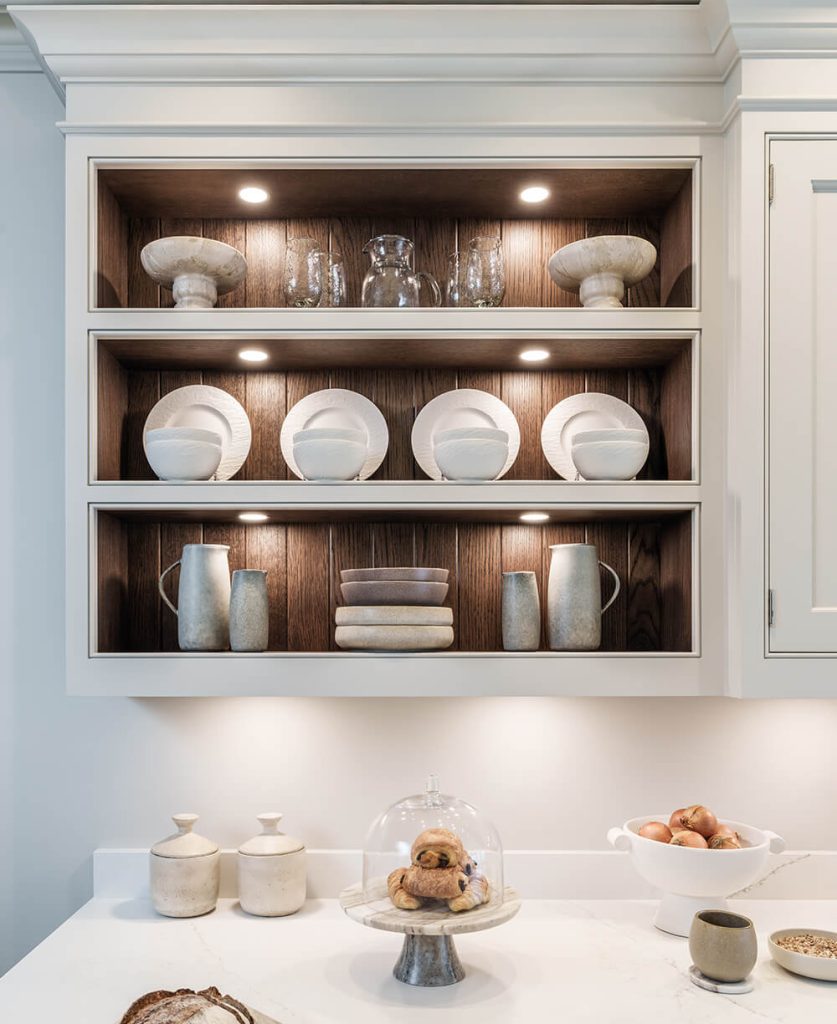
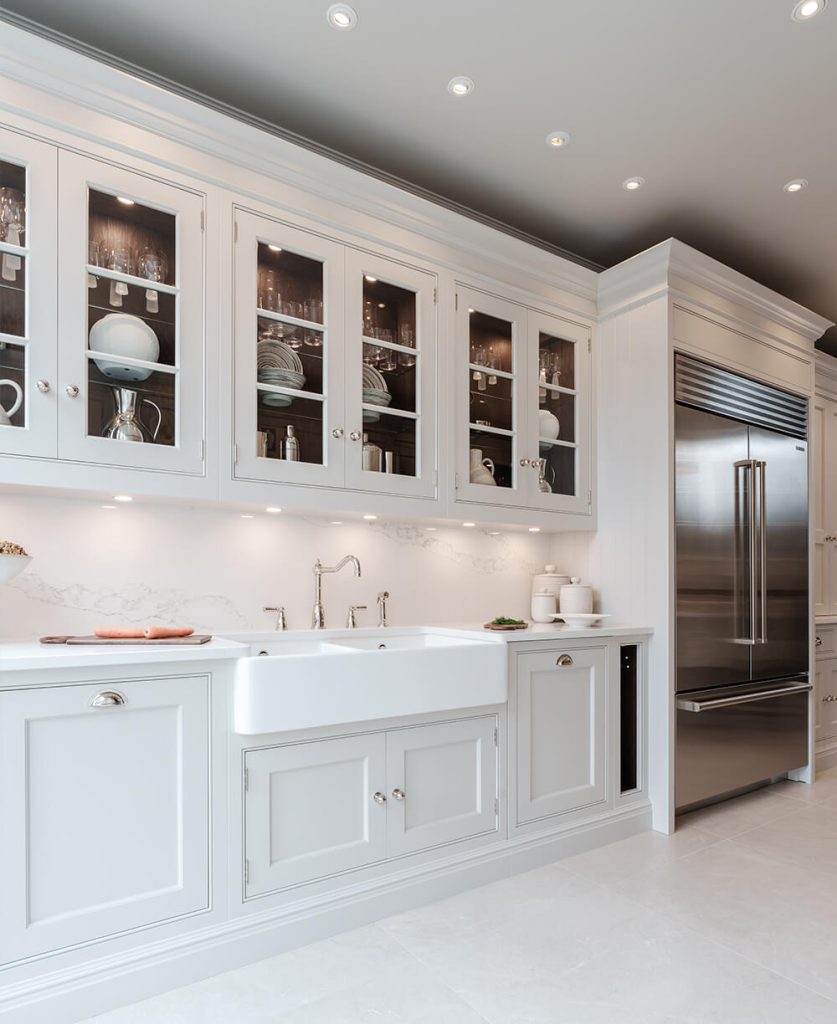
Rather than relying on long, uninterrupted runs of cabinetry, this kitchen embraces a broken-plan approach. Open shelving with Tudor oak panel detailing introduces warmth and texture, while glazed cabinets above the sink, finished with delicate, slim glazing bars, bring lightness and refinement.
This layered approach reflects a growing shift in kitchen design. Solid blocks are giving way to furniture-style elements, varied heights and moments of visual relief. Subtle changes in material and finish feel intentional rather than uniform, creating a space with depth, quiet character and a sense of ease.
Country kitchens are at their best when they strike a careful balance between what is displayed and what is discreetly hidden. This Summerville kitchen excels at both.
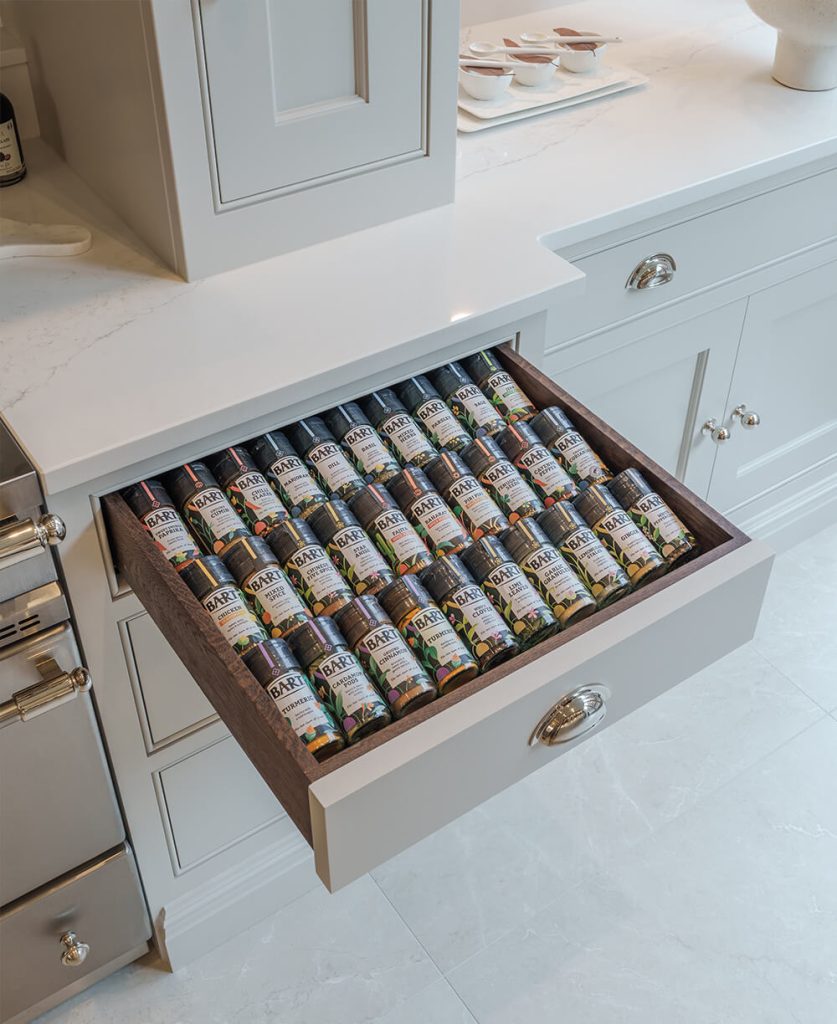
Bespoke internal storage includes a pull-out bin, utensil drawers, a knife block insert, spice drawers and a tailored cutlery drawer, each designed to support everyday cooking without cluttering surfaces. Corner cabinets, traditionally one of the most difficult areas to resolve, are fitted with integrated pull-out racks, while Tudor oak trays positioned beside the sink ensure every inch of space is used effectively.
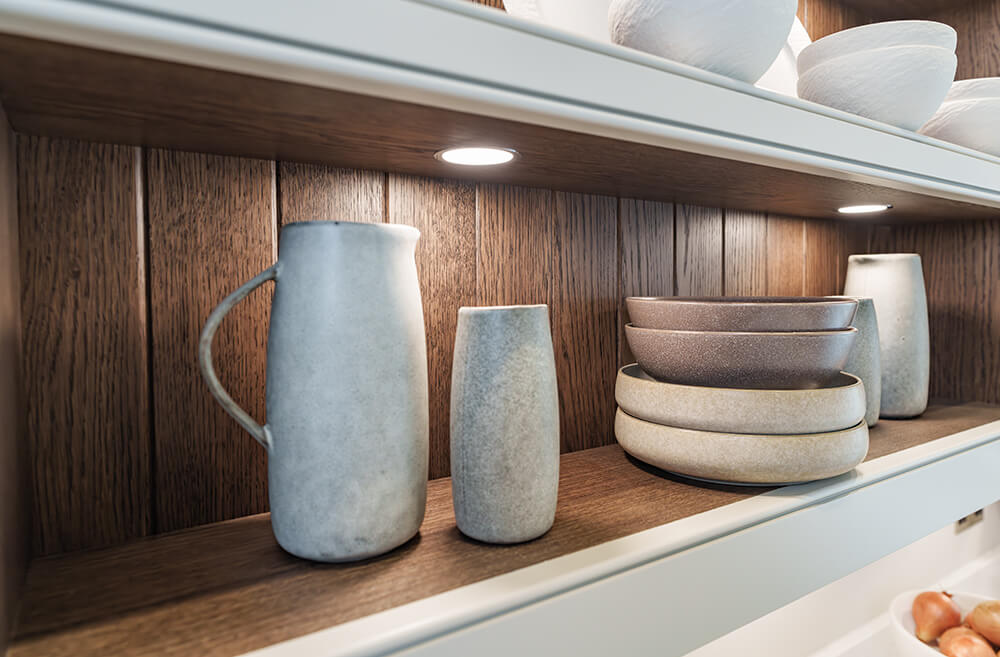
Open shelving, a signature of the Summerville collection, provides space for artwork, ceramics and personal objects, reinforcing the sense that this is a kitchen meant to be lived in, not simply admired.
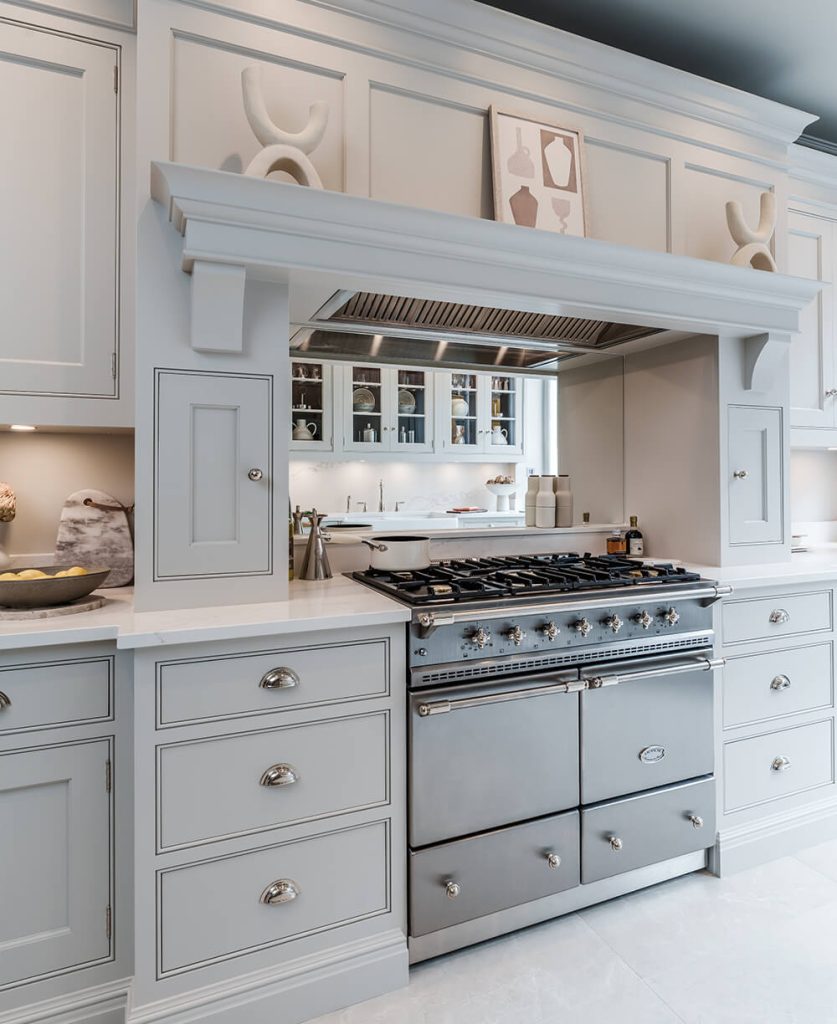
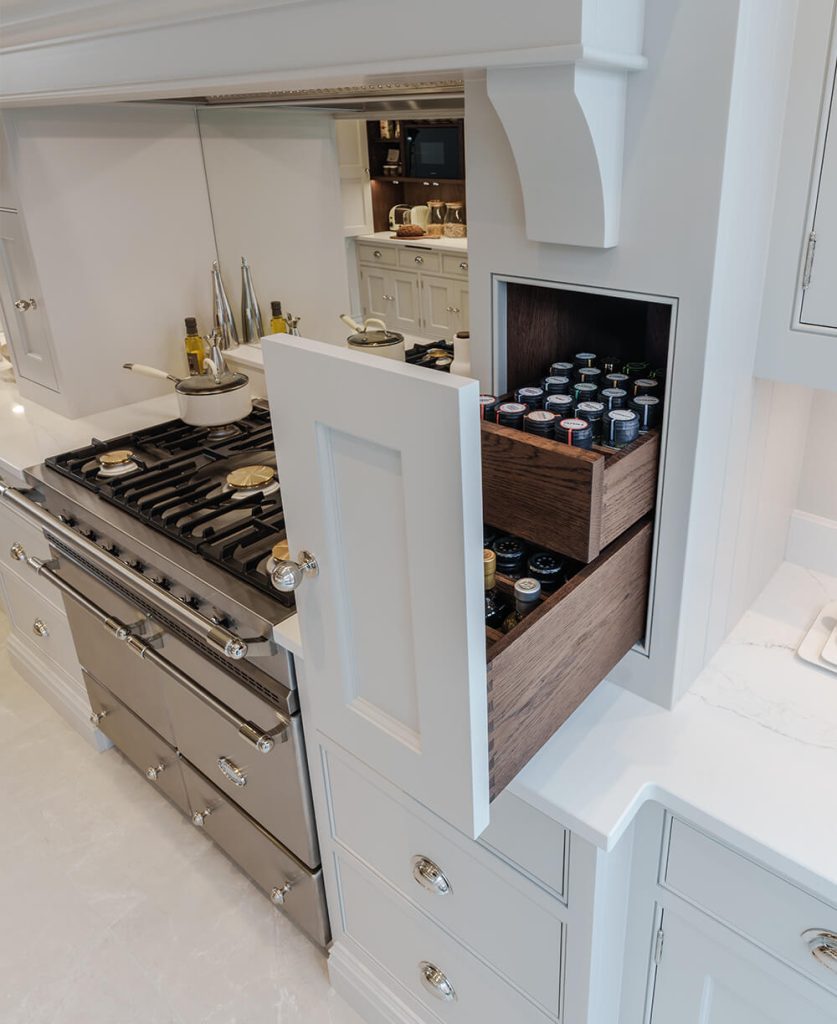
The cooking area is framed by a bespoke chimney, complete with corbels and a mantel shelf. This architectural feature creates a strong focal point while discreetly concealing the Westin extractor fan. Integrated niche storage within the chimney adds another layer of practicality, keeping cooking essentials close at hand without disrupting the visual flow of the room.
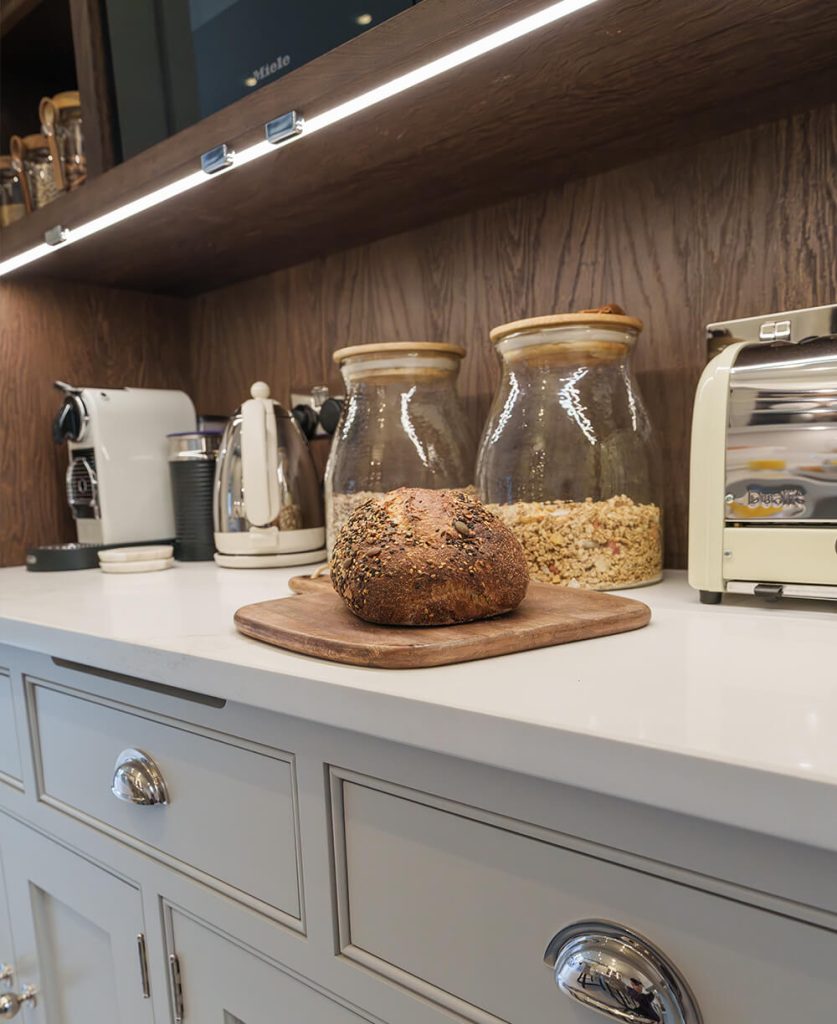
The breakfast pantry is a considered response to modern routines. Designed to house small appliances, including an integrated Miele microwave, it allows the main kitchen to remain calm and uncluttered while creating a relaxed, informal space for everyday use. A durable quartz surface provides a practical area that wipes down easily after the morning rush, while adjustable shelving allows the interior to adapt to changing storage needs.
Premium appliances elevate the space without overwhelming it. A Lacanche range cooker brings professional-level performance and visual gravitas, while a Sub-Zero fridge freezer offers generous, well-organised storage. Finishing touches such as the Bidbury & Co mixer tap with rinse and a classic Whitebirk ceramic sink reinforce the kitchen’s understated elegance.
Painted in Anise, a warm, nuanced neutral, the cabinetry reflects a broader move away from cool greys towards mushroom, putty and earth-led tones. These colours are expected to dominate 2026 kitchen design, valued for the depth, softness and sense of homeliness they bring. Inside, Tudor oak detailing introduces contrast and richness, creating layers of visual interest that complement the warmth of the painted surfaces.
Texture is subtly layered throughout the space. Upholstered stools from The Chair People bring softness and tactility to the peninsula, while polished nickel handles provide just enough gleam to balance the warmth of the palette with a touch of refinement.
Lighting is thoughtfully integrated to enhance both function and atmosphere. LED task lighting is discreetly routed into the pantry shelving and tucked beneath upper cabinets, supporting everyday kitchen use. Above the peninsula, a large drum pendant with a diffuser softens acoustics and casts a gentle, ambient glow, giving the kitchen a warm, living-room feel.
To discover how a Tom Howley kitchen could work in your home, book a free design visit or visit one of our showrooms to experience our collections firsthand.